



Are Dental Implants Worth It? Benefits and Long-Term Results
You don’t really notice how much you use your teeth until one goes missing.
Suddenly, simple things start changing. You chew from one side. You avoid crunchy food. You smile carefully in photos. Sometimes you even speak a little differently without realizing it.
A lot of people try to “adjust” to missing teeth for years. But your mouth keeps changing even when you get used to the gap. Nearby teeth may shift, your bite can feel uneven, and the jawbone underneath may slowly weaken over time.
That’s why more people today are choosing dental implant treatment instead of temporary fixes that constantly need adjustments.
At Welldent Dental Clinic, many people come in thinking implants are only about looks. But once they understand the long-term benefits, they realize implants are actually about comfort, function, confidence, and protecting oral health for the future.
Still, one common question always remains:
“Are dental implants really worth it?”
What Makes Dental Implants Different?
Other tooth replacement methods mainly focus on filling the visible gap. Dental implant treatment works differently because it replaces both the tooth root and the visible tooth.
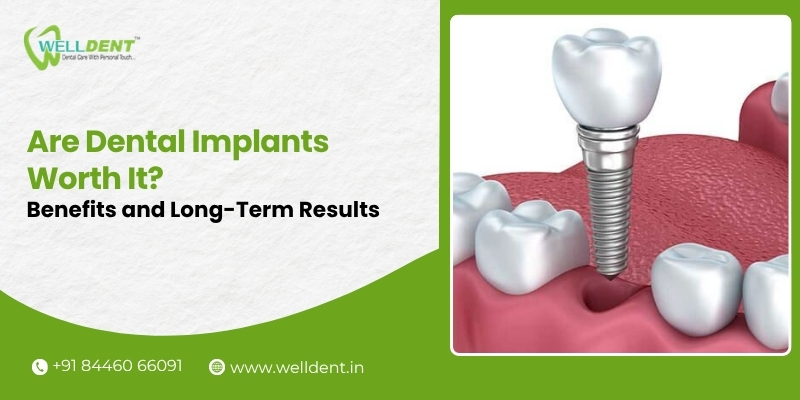
The implant is placed inside the jawbone, where it acts like an artificial tooth root. Over time, the bone naturally bonds with the implant, creating a stable foundation for the replacement tooth.
This is one reason why implants are considered a permanent tooth replacement solution rather than a temporary fix.
At Welldent Dental Clinic, patients often choose dental implant treatment because it offers stronger support, better comfort, and more natural function compared to removable options.
Why Missing Teeth Should Not Be Ignored?
Some people delay treatment because they can still “manage” without one or two teeth.
However, missing teeth can gradually affect:
- - Chewing ability
- - Jawbone health
- - Bite balance
- - Speech clarity
- - Facial appearance
One major concern after tooth loss is bone shrinkage. The jawbone needs stimulation from tooth roots to stay healthy. Without that stimulation, bone loss may begin slowly over time.
Modern dental implant treatment helps prevent bone loss after missing teeth because the implant continues stimulating the jawbone naturally.
This also improves jawbone support after tooth loss and helps maintain facial structure.
Benefits of Choosing Dental Implants For Teeth Replacement
1. Dental Implants Feel More Natural
One reason implants are becoming increasingly popular is comfort.
Unlike removable dentures that may shift while eating or speaking, implant-supported teeth replacement stays fixed securely inside the mouth.
Patients often say implants feel much closer to natural teeth because:
- - They stay stable
- - They don’t move while chewing
- - They look natural
- - They allow easier speaking
2. Dental Implants Help Preserve Jawbone Health
When teeth are missing for long periods, the jawbone may gradually weaken.
This affects:
- - Facial shape
- - Gum support
- - Bite alignment
- - Neighboring teeth
One major advantage of dental implant treatment is jawbone support after tooth loss.
Because implants stimulate the bone like natural roots, they help prevent bone loss after missing teeth more effectively than removable options.
People who delay replacement for years may experience greater bone shrinkage over time.
3. Titanium Implants Are Designed for Strength
Modern implants are usually made from titanium because it bonds well with human bone.
Some important titanium tooth implant benefits include:
- - Strong bone integration
- - Long-term durability
- - Biocompatibility
- - Better stability during chewing
4. Implant Stability Matters for Long-Term Results
One major reason people choose implants is their strong stability.
Implant stability and durability help patients eat, speak, and smile more comfortably without worrying about movement or slipping.
This is especially important for patients using implant-supported teeth replacement for multiple teeth.
Unlike temporary removable solutions, implants are designed for daily function over many years.
With proper care, implant stability and durability can support long-term success and comfort.
5. Advanced Implant Technology Has Improved Results
Modern dentistry has improved implant procedures significantly.
Today, advanced dental implant treatment often includes:
- - Digital scans
- - 3D imaging
- - Guided implant placement
- - Precise treatment planning
These technologies improve accuracy and reduce complications.
Advanced treatment also helps dentists customize care according to jawbone condition and smile goals.
6. Implants Can Restore Chewing Ability
Many people don’t realize how much missing teeth affect daily eating until they restore them.
Chewing from only one side can create a pressure imbalance inside the mouth. Over time, this may affect surrounding teeth and jaw comfort.
One of the biggest advantages of dental implants for missing teeth is restoring the smile and chewing function more effectively.
Patients often regain confidence in eating:
- - Fruits
- - Nuts
- - Rotis
- - Crunchy vegetables
- - Meat and harder foods
Proper chewing also supports digestion and overall health.
Restoring smile and chewing function is one of the biggest goals of modern implant care.
Healing After Implant Procedure
One common fear patients have is recovery.
The truth is that healing after implant surgery is usually manageable for most patients when proper instructions are followed.
Some temporary symptoms may include:
- - Mild swelling
- - Minor discomfort
- - Temporary sensitivity
Most patients return to regular routines within a few days.
Long Term Results of Dental Implants
You might initially choose implants for cosmetic reasons, but the benefits go beyond appearance.
Successful dental implant treatment may support:
- - Better chewing balance
- - Improved speech
- - Reduced pressure on nearby teeth
- - Healthier jawbone structure
- - Long-term oral health improvement
Properly placed implants can also reduce complications caused by shifting teeth or unstable dentures.
Are Dental Implants Durable?
Yes, implants are designed to last many years with proper care.
Good oral hygiene and regular dental visits are extremely important.
Patients should:
- - Brush regularly
- - Floss carefully
- - Attend dental checkups
- - Avoid smoking
These habits support implant stability and durability over time.
Many patients continue using implants comfortably for decades.
This is one reason implants are often considered a long-lasting tooth replacement option compared to temporary alternatives.
Who Is a Good Candidate for Implants?
Many adults can qualify for dental implants for missing teeth, but a proper evaluation is still important.
Your dentist may check:
- - Gum health
- - Bone density
- - Medical history
- - Smoking habits
- - Oral hygiene condition
At Welldent Dental Clinic, every dental implant treatment plan is customized according to the patient’s oral health and smile goals.
Why Early Treatment For Missing Teeth Is Better?
The longer missing teeth remain untreated, the more bone loss may occur.
Early treatment often makes procedures simpler and supports better healing outcomes.
Early care also helps with:
- - Preventing bone loss after missing teeth
- - Maintaining bite alignment
- - Preserving facial appearance
At Welldent Dental Clinic, patients are encouraged not to delay replacement unnecessarily.
Are Dental Implants Really Worth It?
Missing teeth can affect much more than appearance. They can influence chewing, confidence, speech, and jawbone health over time.
Modern dental implants offer a reliable way to restore both function and comfort while supporting long-term oral health.
From single tooth dental implant options to full mouth dental implant treatment, today’s implant solutions are safer, stronger, and more natural-looking than ever before.
At Welldent Dental Clinic, every treatment plan is personalized to help patients achieve healthier smiles, stronger chewing ability, and better long-term confidence.
If you’ve been wondering whether dental implants are worth it, the answer often depends on one simple thing, how important comfort, confidence, and lasting oral health are to you.
FAQs
How do dental implants support long-term oral health improvement?
Dental implants help maintain jawbone strength, prevent nearby teeth from shifting, and improve chewing balance, all of which contribute to better long-term oral health improvement and overall mouth function.
Is dental implant treatment painful?
Most patients experience only mild discomfort during and after dental implant treatment because the procedure is performed under anesthesia, and modern techniques help improve comfort.
How long does healing take after implant surgery?
Healing after implant surgery can vary from person to person, but most patients recover within a few days, while complete bone healing may take a few months.
Can dental implants improve chewing ability?
Yes, dental implants for missing teeth can significantly improve chewing strength, bite balance, and overall comfort while eating.
What happens during a single tooth dental implant procedure?
In a single tooth implant procedure, a titanium implant is placed inside the jawbone to act like an artificial tooth root. After healing and bone bonding, a custom crown is attached on top to restore the missing tooth naturally. One major advantage is that nearby healthy teeth usually do not need to be cut or altered.